01
Entrance & Hallway
A woven ajiro ceiling, a herringbone floor.
Old pottery and vermilion walls draw you inward.
Tokyo. Osaka. Kyoto.
You already know them.
So — on to the next Japan.
Himeji. A castle town.
One whole house, entirely yours.
Showa-era bath tiles, a chabudai table, tatami.
Not oldness, but layers of time —
left exactly as they were.
On the bathroom wall, The Great Wave off Kanagawa.
Painted by the owner, with his own hands.
A woven ajiro ceiling, a herringbone floor.
Old pottery and vermilion walls draw you inward.
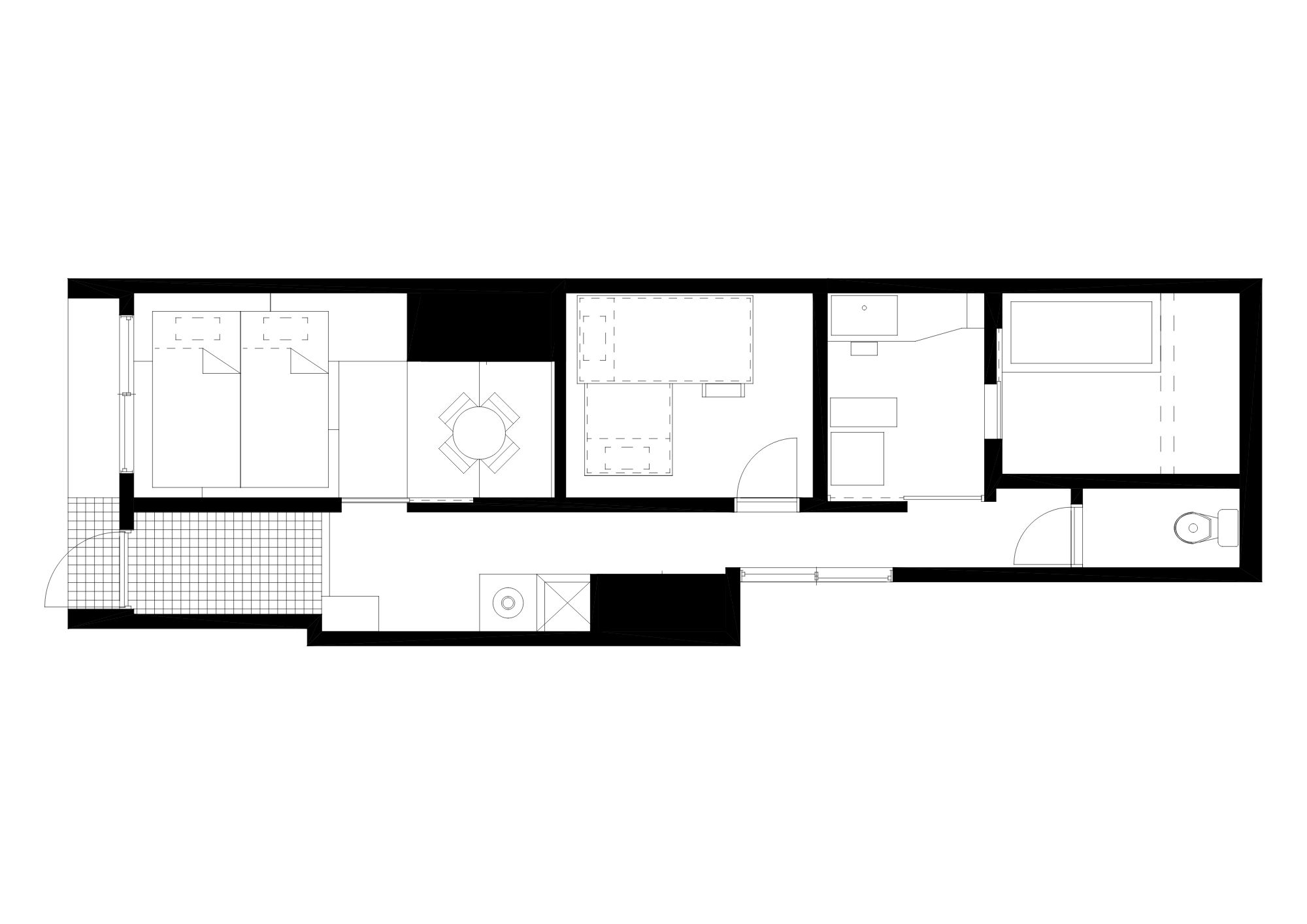
The only room in the house the southern light reaches.
On the tatami, futons already made up — one for every guest.
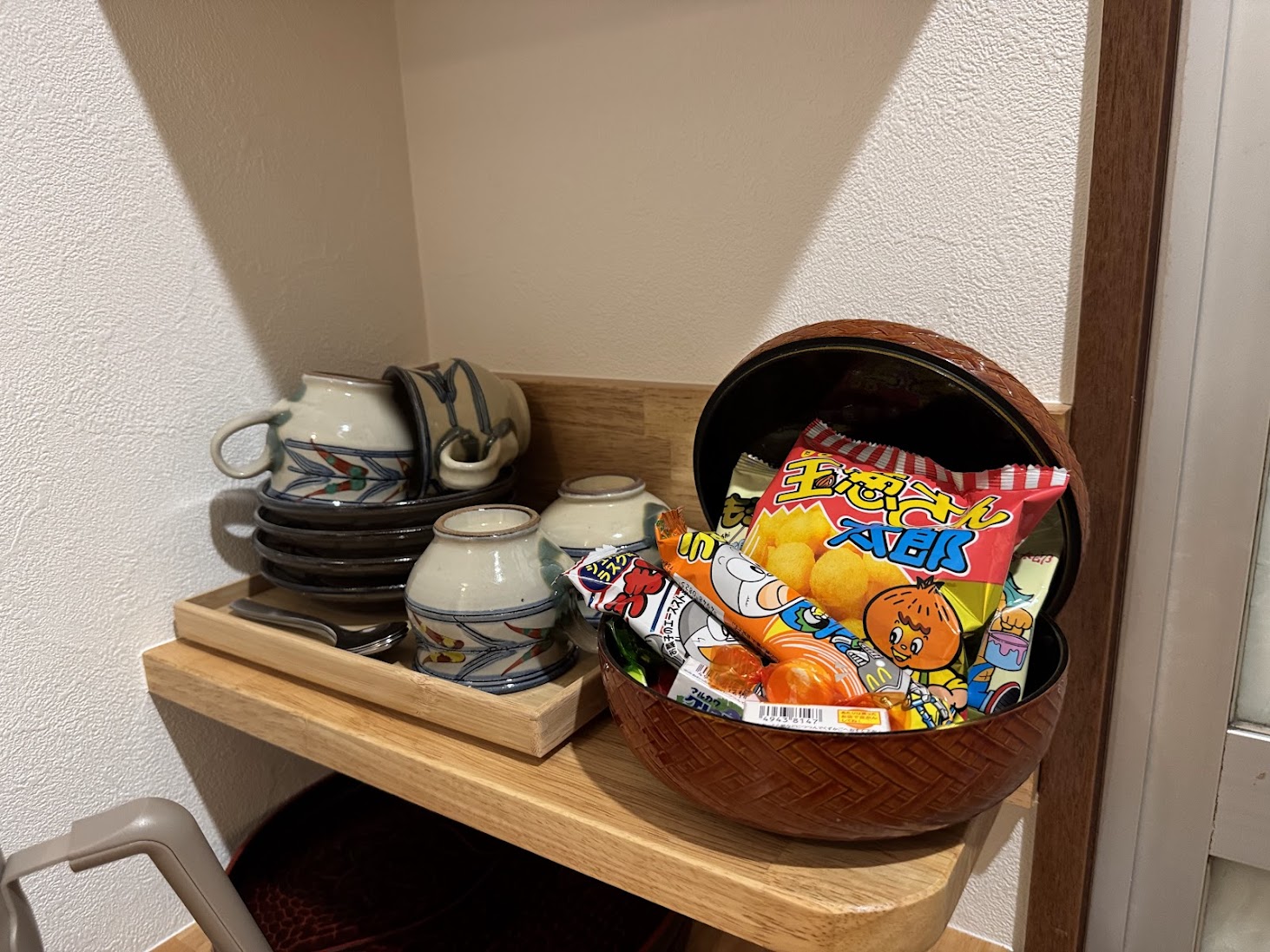
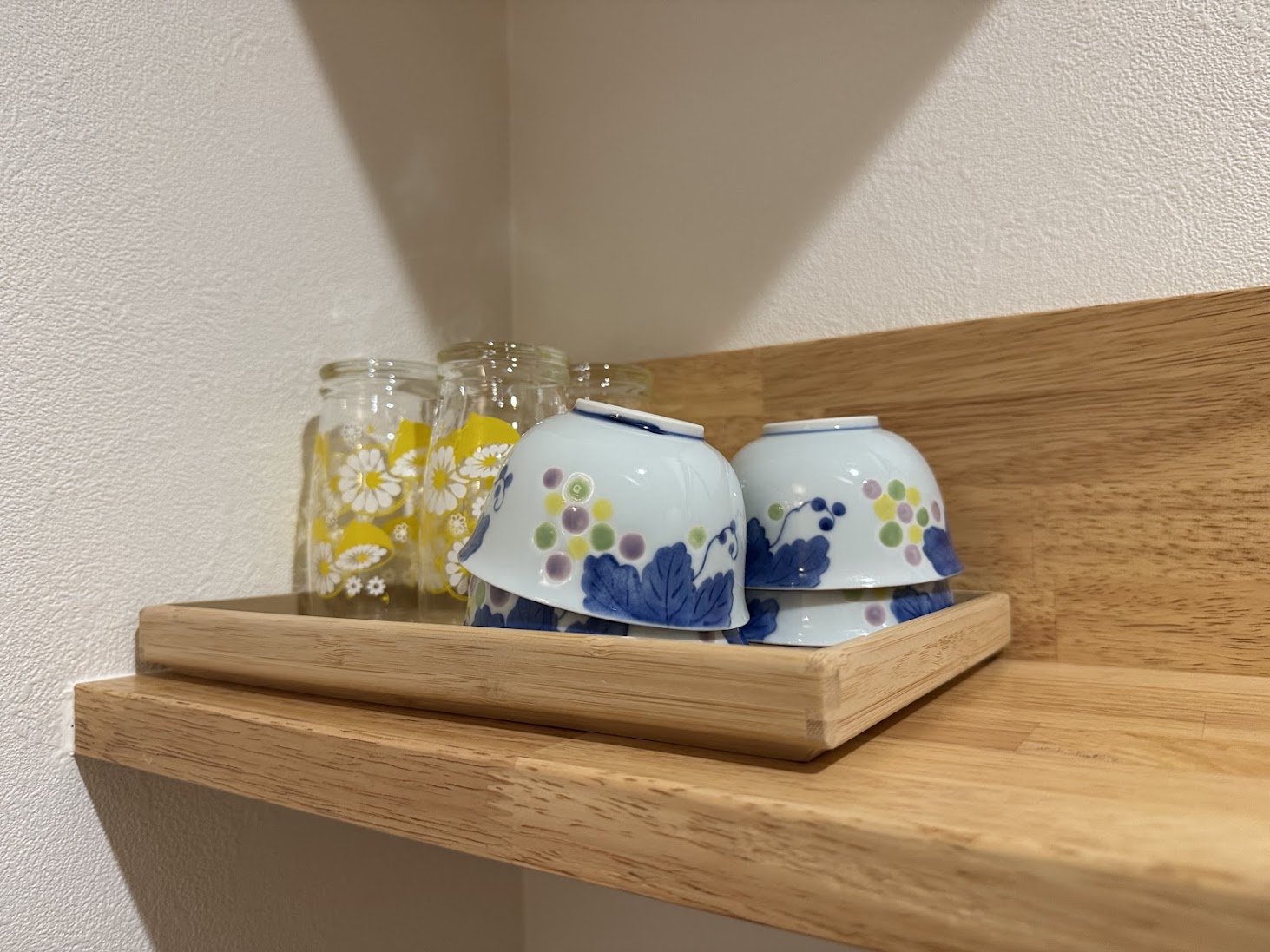
Boil the water, pour a cup.
Showa-era teaware and sweets are waiting.
“Tobacco.” “Postage Stamps.”
Showa signboards on the wall, and something in you turns eight again.
A mosaic-tiled tub, a stone garden, and The Great Wave off Kanagawa.
Like a Japanese sento, at the end of the day.
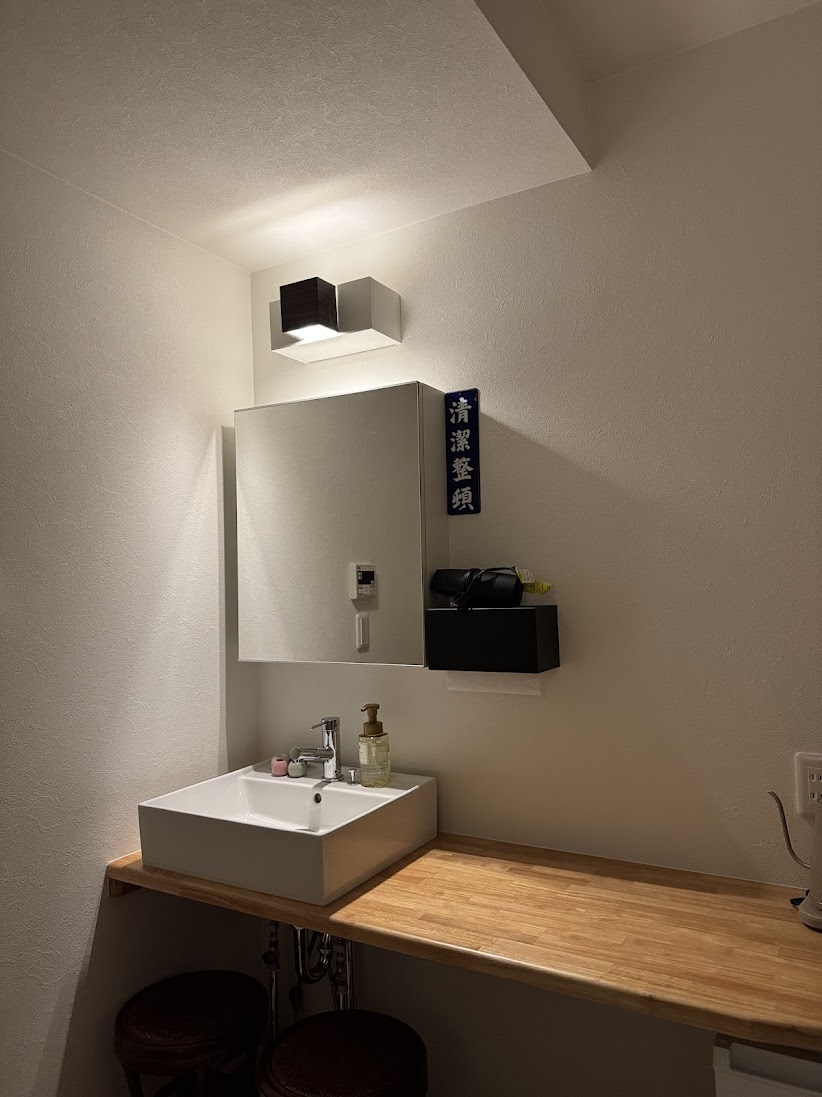
Beneath a retro “Clean and Tidy” sign:
a bidet toilet, a washer-dryer, and everything a long trip needs.
Hospitality, one object at a time.
Showa teaware, andon lanterns, signboards, a chabudai table.
Pick them up. Look. Touch.
Bakeries in the morning, castle-town udon at noon, a local izakaya at night. Himeji's food, all on foot.
Twelve minutes to Himeji Castle, five to the arcades. Not a sightseeing spot — a castle town where people actually live.
Mosaic tiles, a wall painting, a stone garden — a bath for your group alone. Sink in deep at the end of the day.
Japan's first UNESCO World Cultural Heritage Site.
Himeji Castle, loved as the White Heron Castle.
Go in the morning, before the crowds.
Or in the evening, lit up against the dark.
Not the restaurants built for tourists —
the castle-town places the locals go.
Mornings in the castle town start with local bread and freshly brewed coffee.
Himeji's famous ekisoba, akashiyaki, and seafood bowls of local fish.
Shoulder to shoulder with the locals, a toast with Banshu sake. Himeji oden, too.
Five minutes on foot to the castle-town arcades. Local sweets, and something to take home.
From ¥5,225 per person when four of you stay.
One group per night. The whole house, for your family alone.
Last-Minute Deal
per night, whole house¥20,900(tax incl.)
For bookings made 7 to 2 days before check-in
There is no TV. By design.
Just a Showa evening around the chabudai.
There is no kitchen. By design.
Going out to eat is part of the journey too.
Sheets come already made up on the futons.
Towels and bedding are provided for every guest.
Last-minute deal — book 7 to 2 days before check-in: ¥20,900 per night for the whole house (tax incl.)
MEGURU — Himeji Castle Town Stay